An eclipse of hummingbird hawk-moths
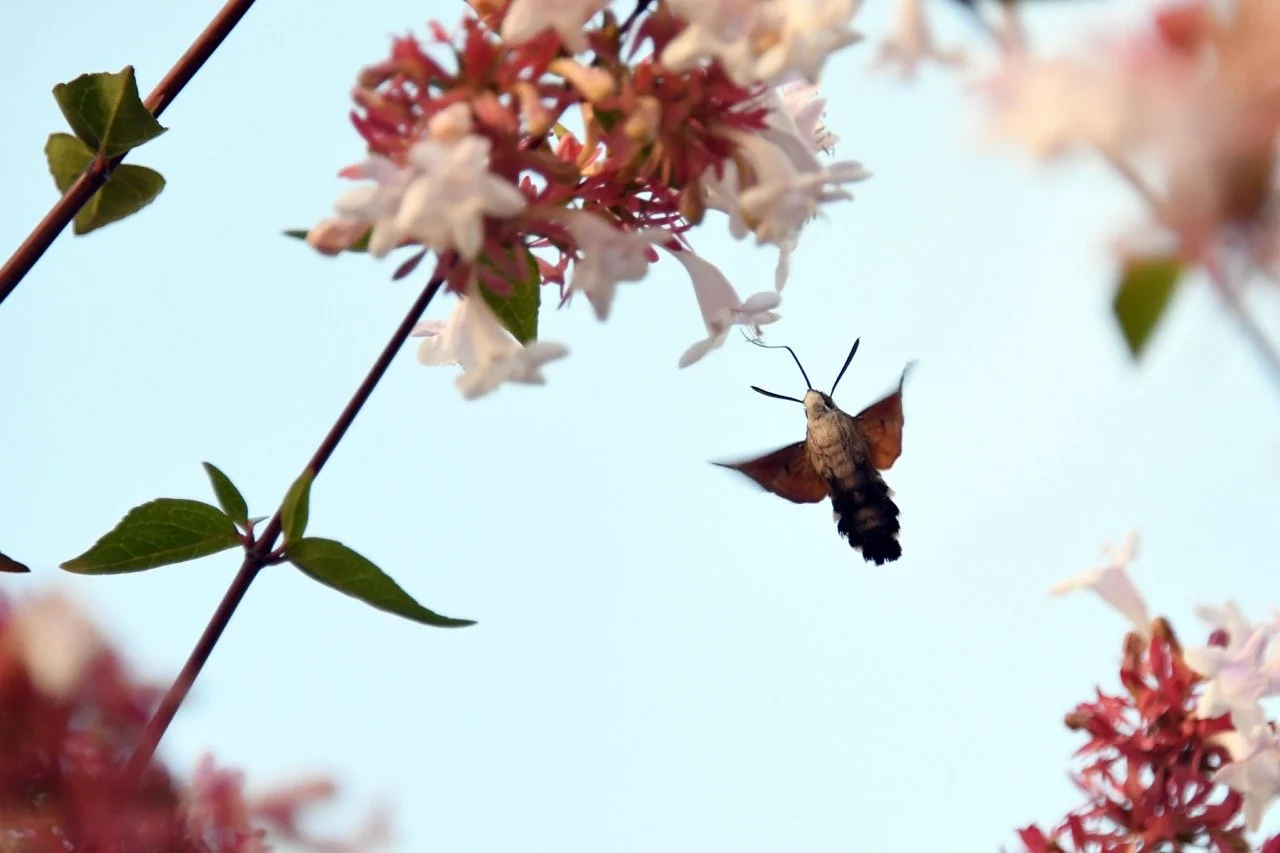
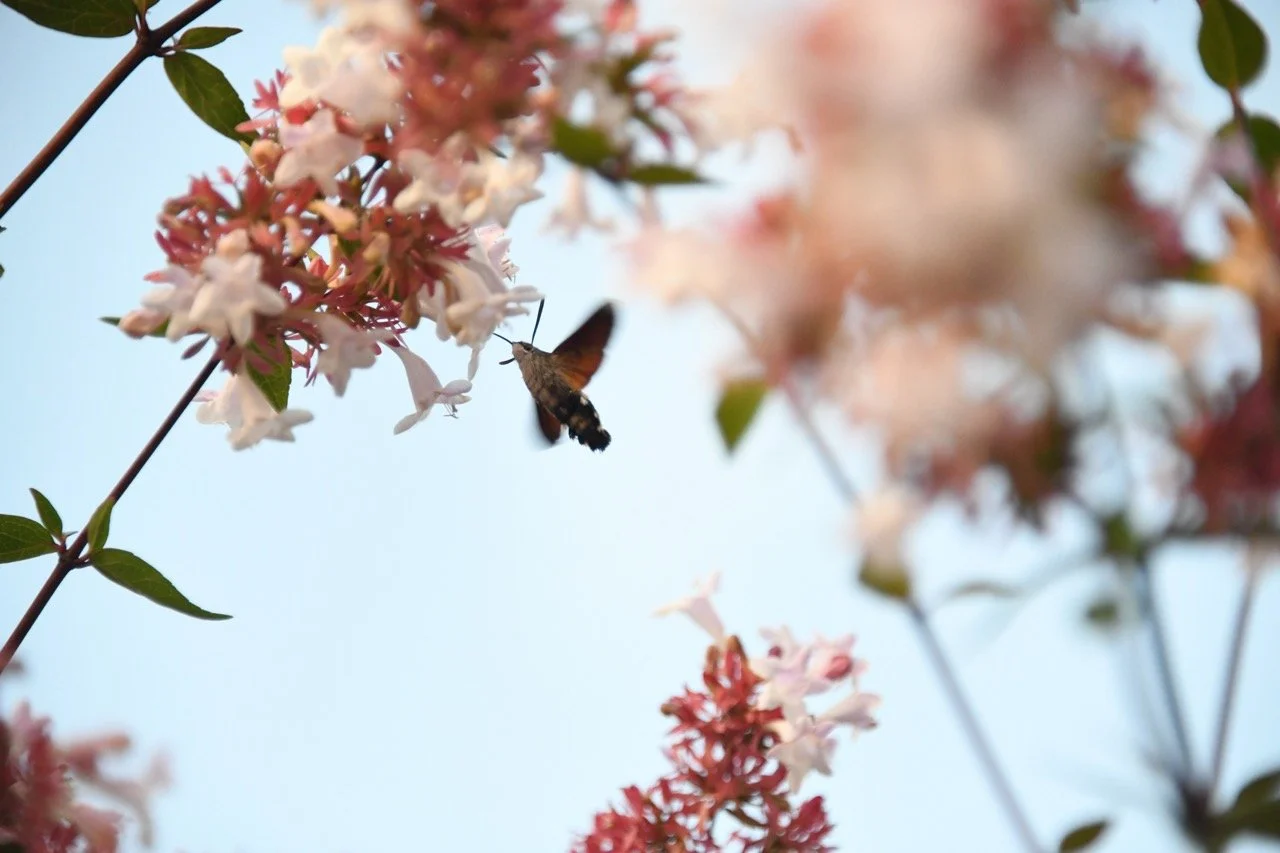
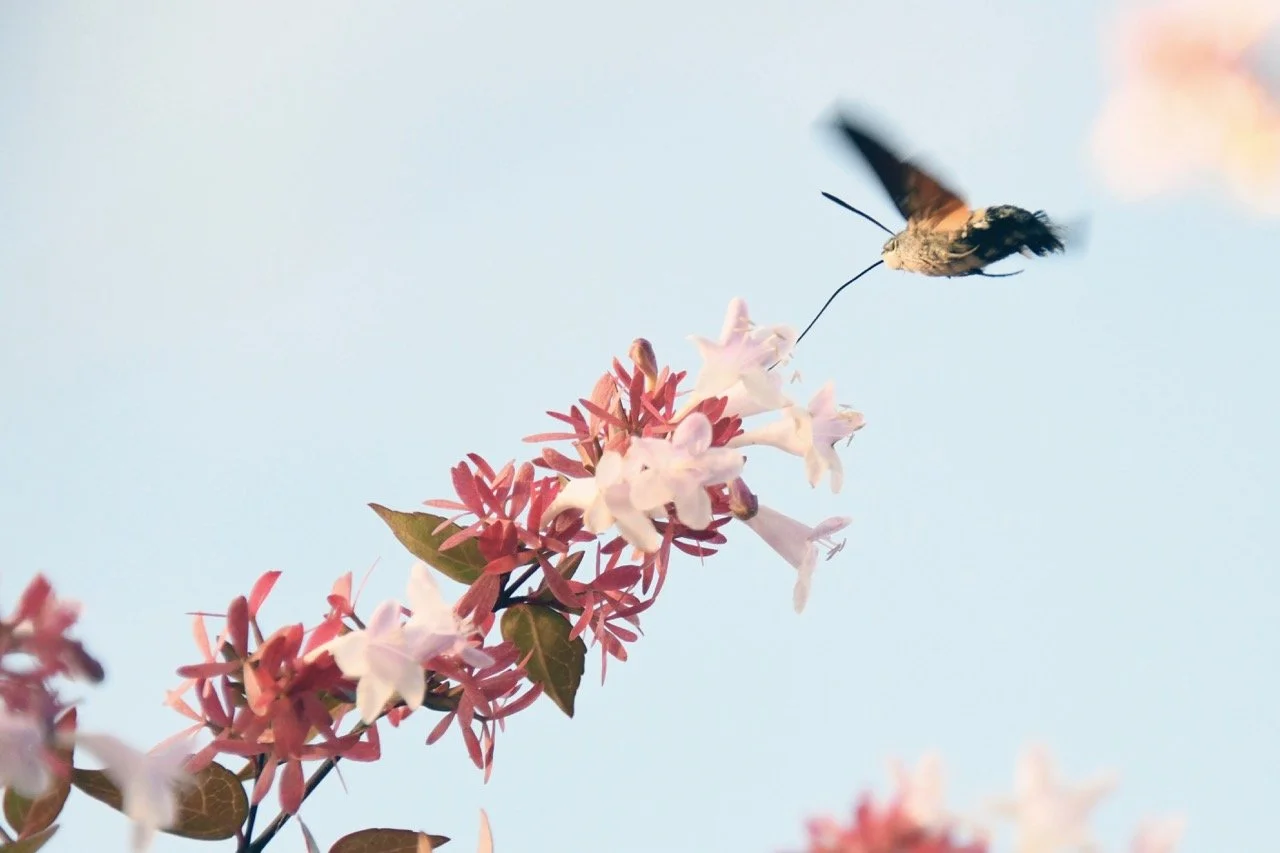
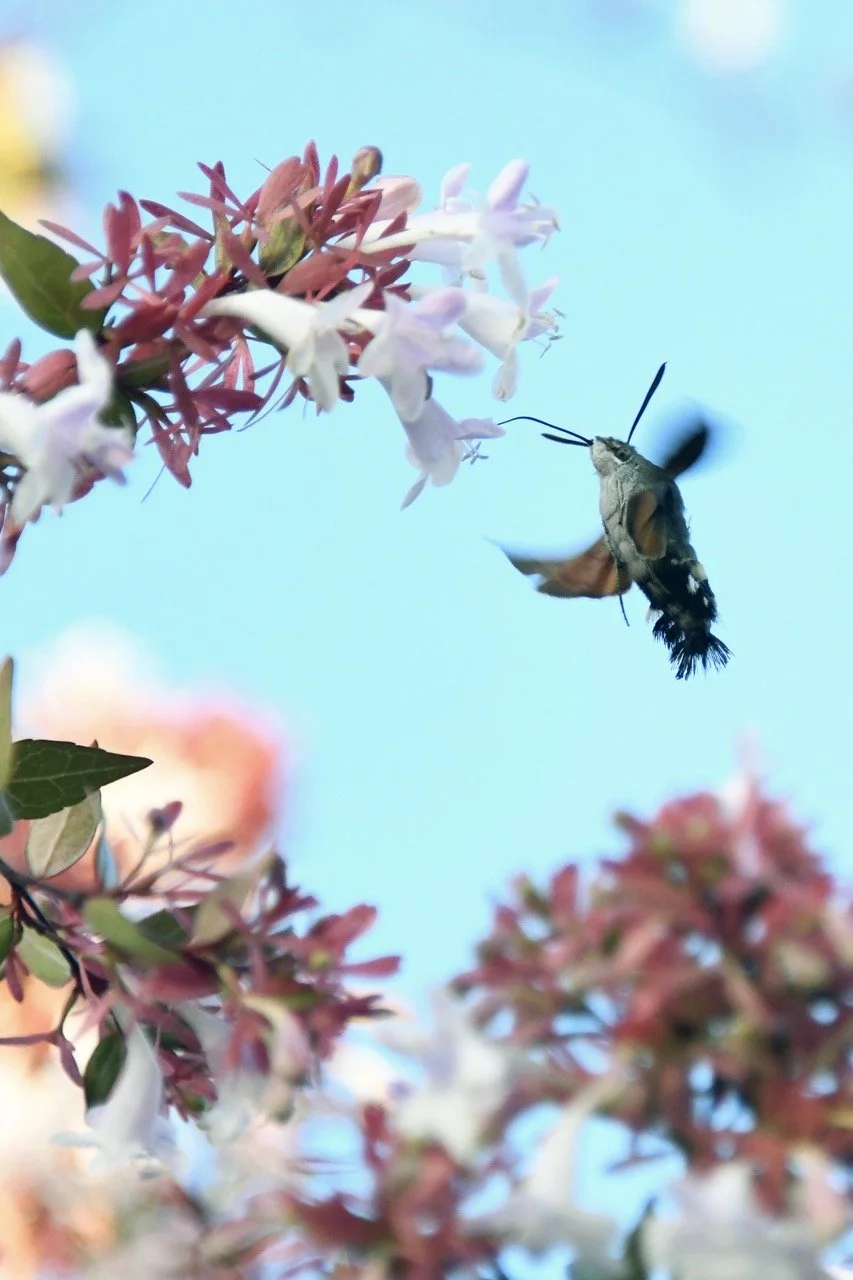
Hummingbird hawk-moth on abelia × grandiflora, commonly known as glossy abelia, a shrub of the honeysuckle family.
First things first: I feel somewhat guilty about enjoying the effects of climate change when much of the world is suffering because of it. But it was hard not to love the Cornish summer; long days of glorious sunshine with a light coastal breeze. (I couldn’t believe arriving in London on my one visit to the city over the summer; it felt like I’d arrived in Bangkok, so hot, humid and windless was it).
Anyway, an unexpected but delightful visitor during the warm weather was the hummingbird hawk-moth, which had a record number of UK sightings this year (compared to just eight recorded sightings in 2021). The first time I saw one I couldn’t even work out what it was – it’s chunky enough to be a small bird and moves incredibly fast. Its orange hindwings makes it look like a blur of colour as it flits from flower to flower. Unusually for a moth it’s day-flying; we saw them on sunny mornings as well as balmy evenings.
Its name, of course, comes from the hummingbird, most commonly seen in Central and South America (we saw them every day in Costa Rica, and I remember them in the bushes outside our hotel in Lima, Peru). Like the hummingbird, the moth flaps its wings around 80 times a second, creating a humming sound, hovering mid-air to suck nectar from flowers using their long, curled proboscis.
N.B. An eclipse is the collective noun for moths.
I also made a video of a hummingbird hawk-moth in action.